
Coffee is 98% water and 2% dissolved coffee solids. Water has an enormous impact on flavor — and changing your water source can even alter extraction speed.
Why Does Coffee Dissolve in Water?
Water molecules have gaps between them that attract and pull in other substances. When coffee meets water, the compounds responsible for flavor and aroma are drawn into those spaces.
The more heat energy the water has, the more gaps open up. That's why raising water temperature by just 1°C can meaningfully increase extraction yield.
SCA Standards
The SCA (Specialty Coffee Association) has established standards for water used in coffee brewing.
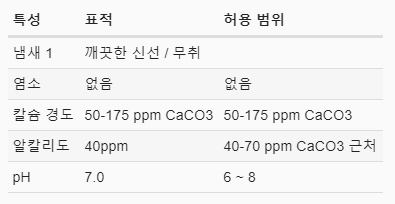
Key criteria:
- No odor (sensory — olfactory)
- No color (sensory — visual)
- TDS measured with 4-4-2 conversion method
Water Components That Affect Coffee
Water carries a positive charge, while coffee compounds carry a negative charge — they attract each other.
Major cations (positive ions) that influence extraction:
| Component | Type | Effect on Flavor |
|---|---|---|
| Magnesium (Mg²⁺) | 2nd-tier cation (hardness) | ~100ppm: boosts sweetness, acidity, mouthfeel / Excess: unpleasant bitterness, astringency |
| Calcium (Ca²⁺) | 2nd-tier cation (hardness) | ~100ppm: boosts sweetness, mouthfeel / ~200ppm: suppresses acidity, increases off-flavors |
| Sodium (Na⁺) | 1st-tier cation | Enhances sweetness and flavor (umami effect) |
| Potassium (K⁺) | 1st-tier cation | Reduces bitterness and acidity |
What is Hardness?
- Hard water (120ppm+): Rich, robust flavor. Strong extraction power.
- Medium water (60–120ppm): Balanced extraction.
- Soft water (under 60ppm): Flat or thin flavor.
Bicarbonate ions (HCO₃⁻) determine alkalinity. They have a buffering effect that softens coffee's acidity.
Which Water Should You Use?
The ideal water depends on the bean and your personal preference.
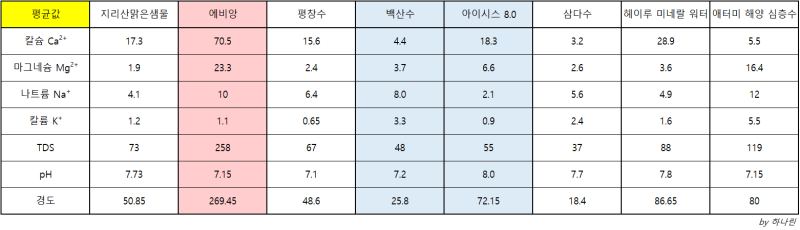
Characteristics of common Korean bottled waters:
- Samdasoo — Low overall mineral content. Minimal extraction benefit. Tends toward higher acidity.
- Baeksan — Higher perceived acidity. Generally preferred over Samdasoo for coffee.
- Icis 8.0 — Appropriate hardness and alkalinity. Smooth with balanced acidity. Ideal for brewing.
- High-hardness water — Good mouthfeel, but flavor can feel rough with a strong mineral taste.
- Filtered tap water — Clean but flat. Tends to produce higher acidity in the cup.
Higher TDS or hardness doesn't automatically mean better water. Balance is what matters.
Next Chapter
Now that you understand water, it's time to actually brew some coffee. The next chapter covers pour over, bypass, iced coffee, and AeroPress recipes you can follow step by step.